Declare Red List Free Materials: What Architects Need to Know for Interiors
Material Transparency as a Design Responsibility
Interior environments directly influence occupant health, yet many conventional building products contain chemical constituents that pose long-term risks to indoor air quality and human wellbeing. Declare Red List Free materials respond to this challenge by offering a transparent framework for identifying and eliminating substances known to be harmful. For architects, understanding how Declare functions within interior specification is increasingly essential as health-focused design becomes a regulatory and ethical priority.

Understanding the Declare Programme
What the Red List Represents
The Red List is a compilation of chemicals identified by the International Living Future Institute (ILFI) as posing significant risks to human and environmental health. These substances—including certain flame retardants, phthalates, and halogenated compounds—are commonly found in interior finishes, adhesives, and composite materials². Declare Red List Free products confirm that none of these chemicals are intentionally added above defined thresholds.
Declare Labels and Disclosure Levels
Declare labels communicate ingredient transparency through standardised categories such as Red List Free, LBC Compliant, or Declared. Each label provides information on product ingredients down to 100 ppm, offering architects clarity when comparing interior materials. This level of disclosure supports informed decision-making without requiring specialist chemical expertise³.
Verification and Third-Party Oversight
Products listed in the Declare database undergo third-party verification to ensure accuracy and consistency. Manufacturers must update disclosures periodically, maintaining accountability as formulations or suppliers change. For specifiers, this verification reduces reliance on marketing claims and provides confidence that material health criteria are independently reviewed.
Relevance to Interior Architectural Specification
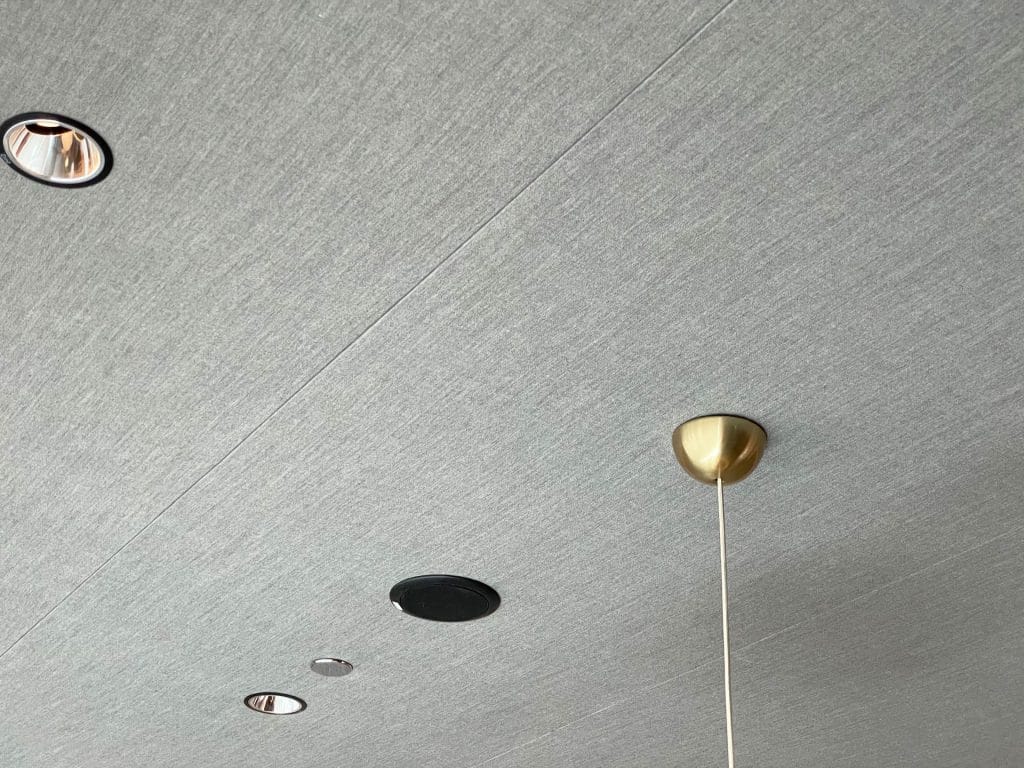
Declare Red List Free materials are most impactful in interior applications where occupants experience prolonged exposure. Wall finishes, ceilings, flooring, and acoustic panels benefit from Red List screening, as these surfaces can emit or release substances over time. Incorporating Declare into interior specifications supports healthier environments without compromising functional or aesthetic intent.
Design Implications for Interior Systems
Interior Finishes and Assembly Selection
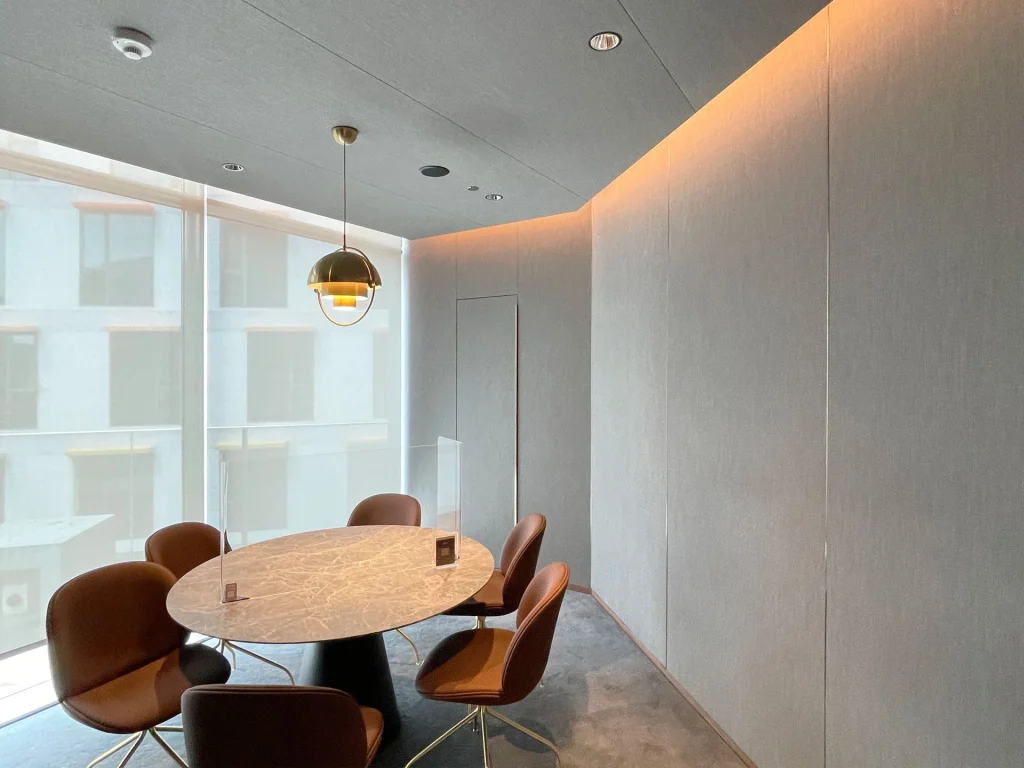
Selecting Red List Free interior finishes requires evaluating entire assemblies rather than individual components. Even if surface materials are compliant, backing layers, adhesives, or sealants may introduce restricted substances. Successful specification therefore depends on system-level coordination between finishes, substrates, and installation methods.
Compatibility With Performance Requirements
Red List compliance must align with fire performance, durability, and acoustic requirements. Many manufacturers now offer Red List Free interior products that also meet reaction-to-fire classifications and acoustic performance targets. Early coordination between material health goals and technical performance reduces the risk of late-stage substitutions.
Integration With Certification and Market Practice
Alignment With Living Building Challenge and LEED
Declare was originally developed to support the Living Building Challenge but is increasingly referenced in other frameworks. LEED v4.1 recognises material disclosure and low-emitting materials, allowing Declare listings to support Indoor Environmental Quality and Materials and Resources strategies⁴. This cross-framework relevance enhances the practical value of Red List Free specification.
Industry Adoption and Client Expectations
Demand for Red List Free interiors is growing across education, healthcare, and workplace projects. Clients increasingly view chemical transparency as part of corporate responsibility and risk management. As a result, Declare is transitioning from a niche sustainability tool to a mainstream specification reference⁵.

Red List Free Specification as a Health Baseline
Declare Red List Free materials provide architects with a practical pathway to healthier interior environments grounded in transparency and verified disclosure. By eliminating high-risk chemicals and encouraging full ingredient reporting, Declare shifts interior specification from reactive mitigation to proactive prevention. While Red List compliance introduces additional coordination across supply chains and assemblies, it ultimately strengthens design outcomes by aligning material health with performance, certification, and client expectations. As awareness of chemical exposure grows, Red List Free interiors are likely to become a baseline expectation rather than an aspirational choice, reinforcing the role of architects as stewards of both environmental and human health within the built environment.
References
- International Living Future Institute. (2023). The Red List. ILFI.
- International Living Future Institute. (2023). Declare Program. ILFI.
- International Living Future Institute. (2023). Declare Program Basics. ILFI.
- U.S. Green Building Council. (2023). LEED v4.1 Interior Design and Construction. USGBC.
- World Health Organization. (2010). WHO guidelines for indoor air quality: Selected pollutants. WHO Regional Office for Europe.
- Steinemann, A. (2015). Volatile emissions from common consumer products. Environmental Science & Technology, 49(18), 10793–10800.
Share